


ICTU co-organizes VECOM 2026 Scientific Conference: Bridging the digital divide in the AI era
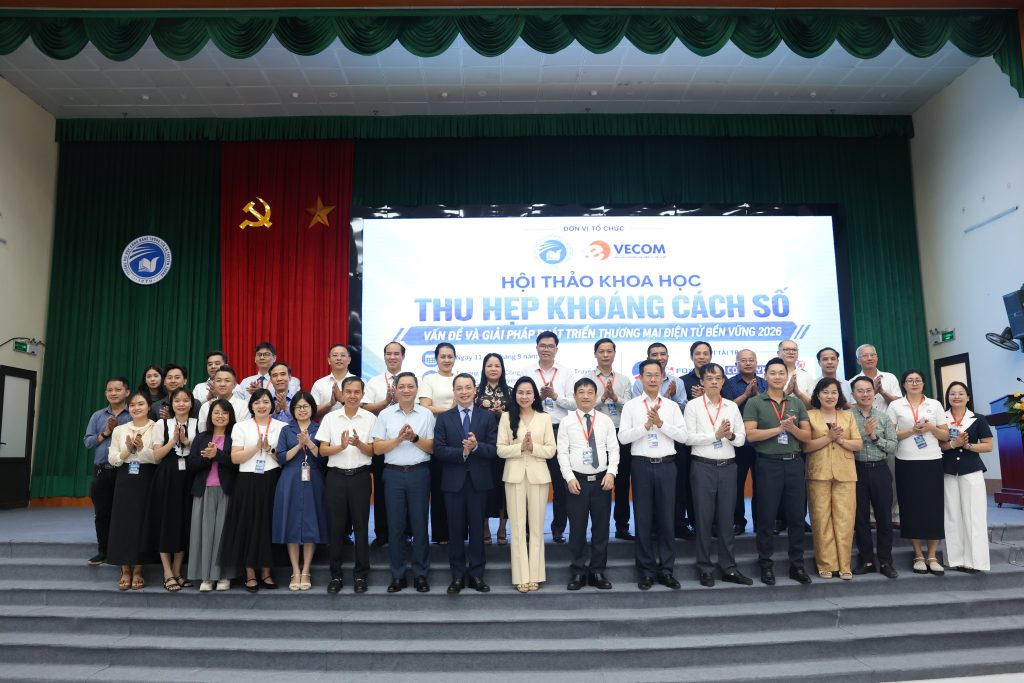
On the morning of September 12, 2026, the scientific conference “Bridging the Digital Divide – Issues and Solutions for Sustainable E-commerce Development” officially took place at Thai Nguyen University of Information and Communication Technology (ICTU). The conference was co-organized by ICTU and the Vietnam E-commerce Association (VECOM), with the aim of identifying barriers arising from the digital divide and proposing solutions to promote sustainable and inclusive e-commerce development in the new period.
The conference was attended by Dr. Le Hoang Oanh, Director General of the Vietnam E-commerce and Digital Economy Agency under the Ministry of Industry and Trade; representatives of the leadership of the Vietnam E-commerce Association; leaders of Thai Nguyen University and ICTU; representatives of agencies, departments, and sectors; and a large number of experts, scientists, researchers, lecturers, students, authors, and business representatives.
From the “Digital Divide” to the “AI Divide”
In his welcoming and opening remarks, Assoc. Prof. Dr. Phung Trung Nghia, Secretary of the Party Committee and Rector of ICTU, emphasized that VECOM 2026 was taking place when artificial intelligence was rapidly transforming e-commerce activities, from content creation, marketing, sales, and customer service to data analysis and operations.
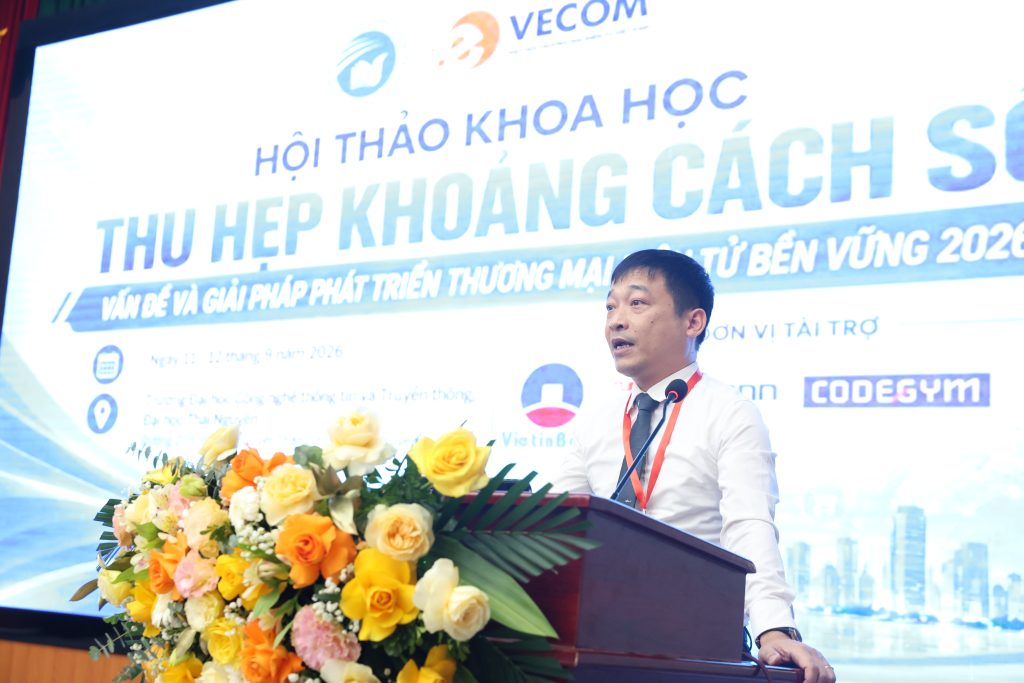
Previously, the digital divide was primarily understood in terms of access to technology. Today, however, a new divide is emerging: the gap in the capacity to apply and master AI. For small and medium-sized enterprises, the question is no longer simply “whether to go digital” but “whether they have sufficient capacity to use AI to compete in the digital environment.”
Against this backdrop, the conference focused on issues arising in the development of e-commerce and the digital economy, particularly disparities in digital infrastructure, human resources, technological capacity, and the ability to adopt new technologies among localities, businesses, and different stakeholder groups.
Completing the Legal Framework for Sustainable E-commerce
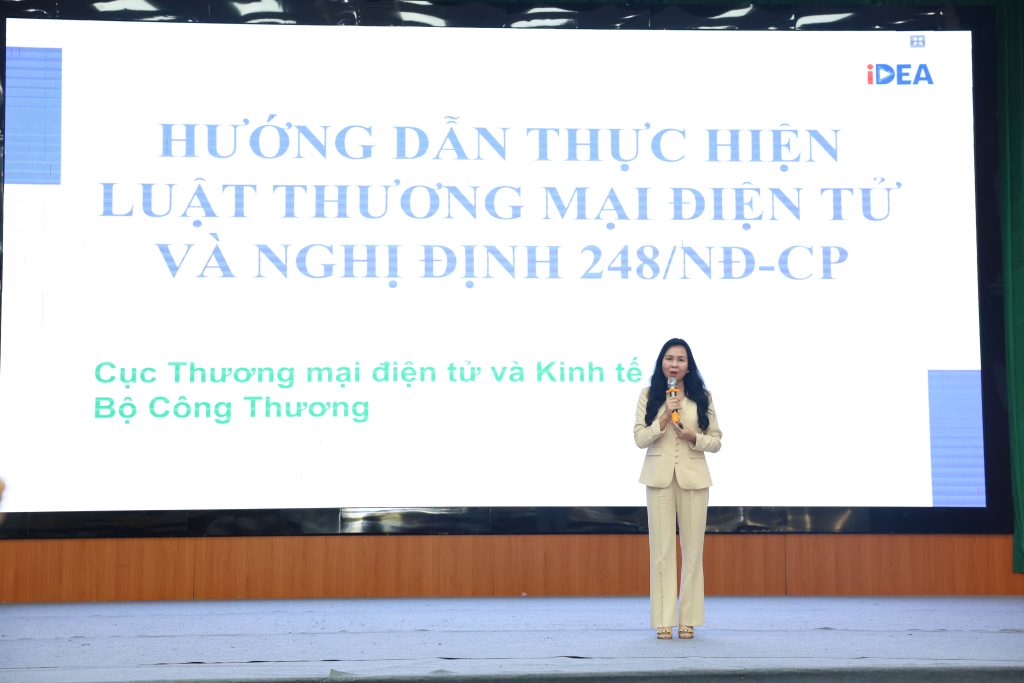
One of the conference’s key components was the plenary session, featuring a presentation entitled “The E-commerce Law and Sustainable E-commerce Development” delivered by Dr. Le Hoang Oanh, Director General of the Vietnam E-commerce and Digital Economy Agency under the Ministry of Industry and Trade.
The presentation clarified new orientations and requirements for completing the legal framework governing e-commerce activities. It also emphasized the role of the legal framework, state management, and the responsibilities of stakeholders across the ecosystem, with the aim of building a transparent, sustainable, and inclusive e-commerce market.
In addition to the plenary session, VECOM 2026 featured seven thematic sessions focusing on sustainable e-commerce, the digital divide, and solutions to bridge it. Numerous in-depth studies addressed practical issues closely related to digital infrastructure, human resources, AI applications, green logistics, agricultural e-commerce, and businesses’ digital transformation capacity.
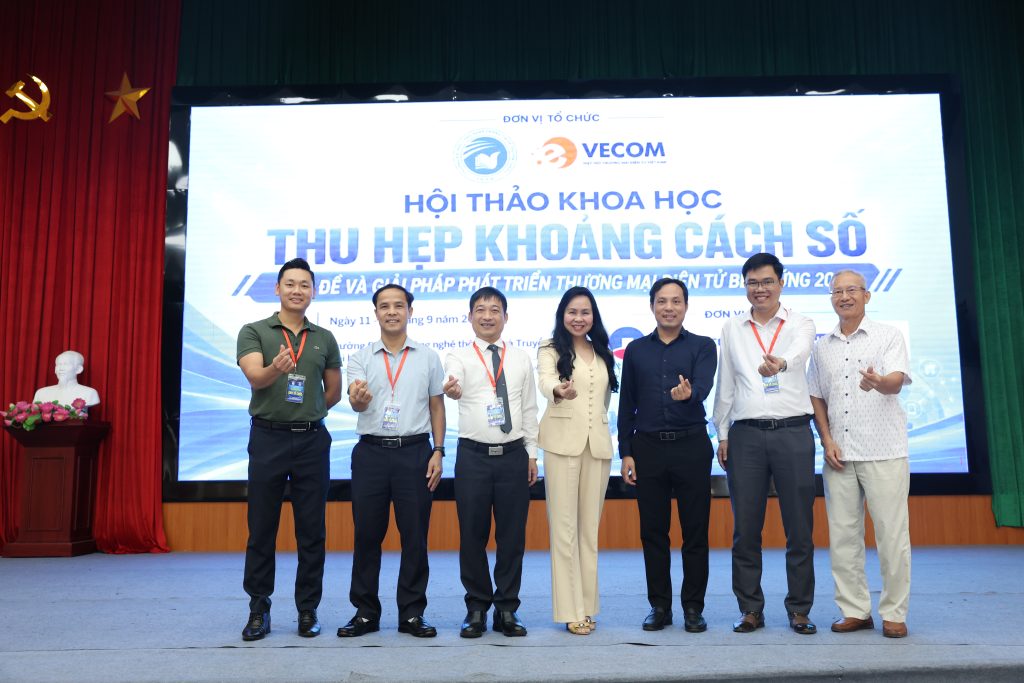
Notably, this year’s conference attracted more than 100 scientific papers from 22 universities, of which more than 60 were selected for presentation and publication, alongside the participation of numerous organizations within the VECOMNET network. The conference served not only as a forum for academic exchange but also as an opportunity to connect regulatory authorities, scientists, universities, and the business community to bring research findings, models, and solutions into practice.
ICTU Aims to Develop a Training Ecosystem Aligned with the Market
During the conference, Assoc. Prof. Dr. Phung Trung Nghia also shared ICTU’s orientations for training human resources in e-commerce and the digital economy.
ICTU is one of the first three universities in Vietnam to offer a degree program in E-commerce. The University currently has nearly 1,500 E-commerce students. When related fields connected with the digital economy, communications, and design are included, the total reaches approximately 5,000 students out of around 14,000 full-time undergraduate students. Alongside the scale of its training programs, ICTU places particular emphasis on the philosophy of “Practicality – Real-world Experience – Hands-on Practice,” enabling students to engage with real market challenges throughout their studies.
One example is the plan to establish a “livestream studio” at ICTU in collaboration with Nguyen Minh Truong, an ICTU alumnus and founder of the An cung ba Tuyet brand. Under this plan, the business will provide products and logistics; the University will organize the space, technology, and training; and students will directly participate in content creation, livestreaming, and sales. In this way, the principle of “real learning – real work – real value creation” will be concretely integrated into the training environment.
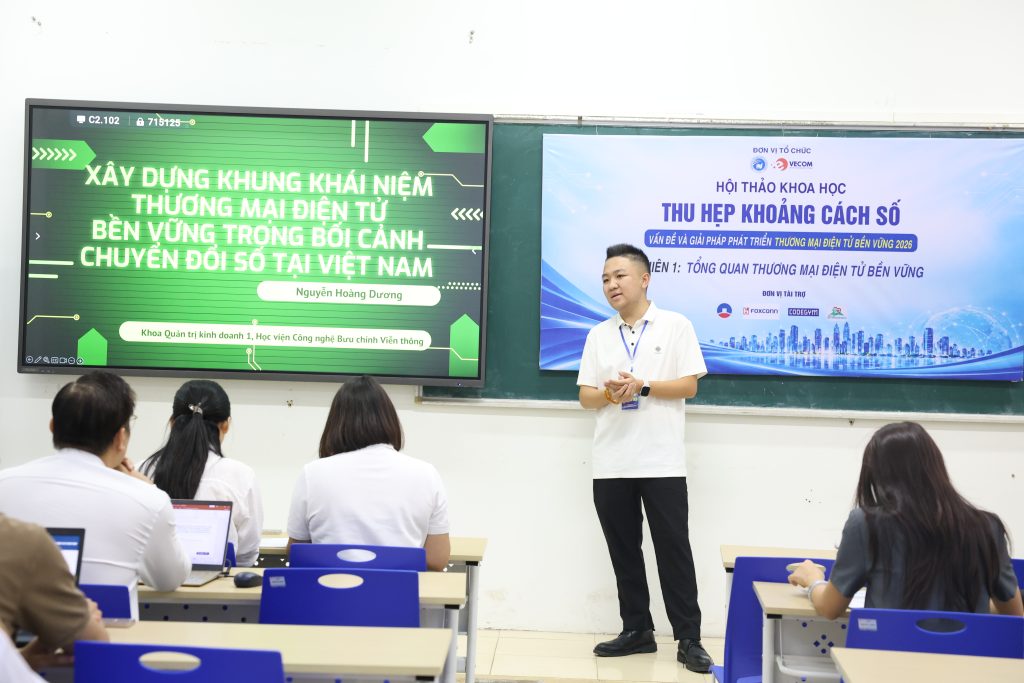
ICTU is also gradually developing an ecosystem connecting the University, students, technology platforms, businesses, media, and entrepreneurship. The University is a strategic partner of the Vietnam Youth Entrepreneurship Support Center under the Central Committee of the Ho Chi Minh Communist Youth Union in student entrepreneurship programs related to e-commerce. It also cooperates with TikTok in various programs to develop e-commerce and the digital economy, while working with Kenan Foundation Asia to implement a program to strengthen AI application capacity, targeting 18,700 micro, small, and medium-sized enterprises nationwide.
Ensuring the Digital Divide Does Not Become an AI Divide
Through VECOM 2026, ICTU and VECOM hope that the conference will go beyond scientific research outcomes to foster further cooperation, models, and practical solutions that bring e-commerce and AI closer to businesses, citizens, and localities.
As emphasized by Assoc. Prof. Dr. Phung Trung Nghia: “Bridging the digital divide also means bridging the AI divide.” The goal is to ensure that AI does not create a new divide but instead becomes a tool that gives businesses and localities more opportunities to develop.
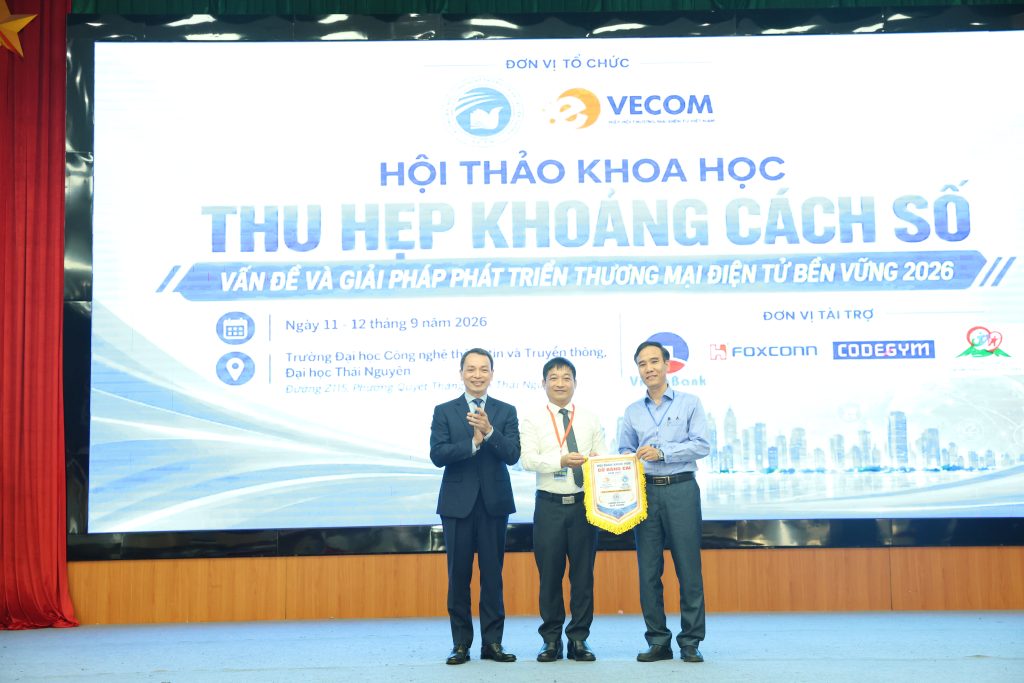
As part of the program, Dr. Bui Trung Kien, Vice President of the Vietnam E-commerce Association (VECOM), and Assoc. Prof. Dr. Phung Trung Nghia, Secretary of the Party Committee and Rector of ICTU, also took part in the flag handover ceremony to Quy Nhon University, the host institution for the VECOM 2027 Scientific Conference, continuing the network’s journey of connection and knowledge sharing.